Mona Badr
About
I was not an athlete growing up. High school’s yearly timed mile filled me with so much anxiety that I often faked being sick to avoid it. I sat on the bench for most basketball games and never felt like a natural.
In college, I started running as a way to stay active and spend time outside. At first, it was casual—2–3 miles a few times a week. After a handful of 5Ks and 10Ks, I wanted more. I ran my first half marathon in physical therapy school, but I still didn’t see myself as a runner. A marathon felt completely out of reach. “Not me—I’m too slow. I’m not an athlete.”
For years, I stayed in that space: running 10Ks and half marathons, setting PRs, but keeping it casual and winging my training. At 31, I thought, “Maybe I could run a marathon.” Just two months into training, I developed severe hip pain and ignored it, pushing through with a toxic idea of what strength looked like. Eventually, I went to PT. Within minutes, he suspected a bone stress injury—and an MRI confirmed three in my pelvis.
I wasn’t prepared for what came next. Being sidelined shook my identity. My relationship with movement and food suffered, and I lost all motivation. Recovery was slow, and I became fixated on speeding it up, even though I knew better.
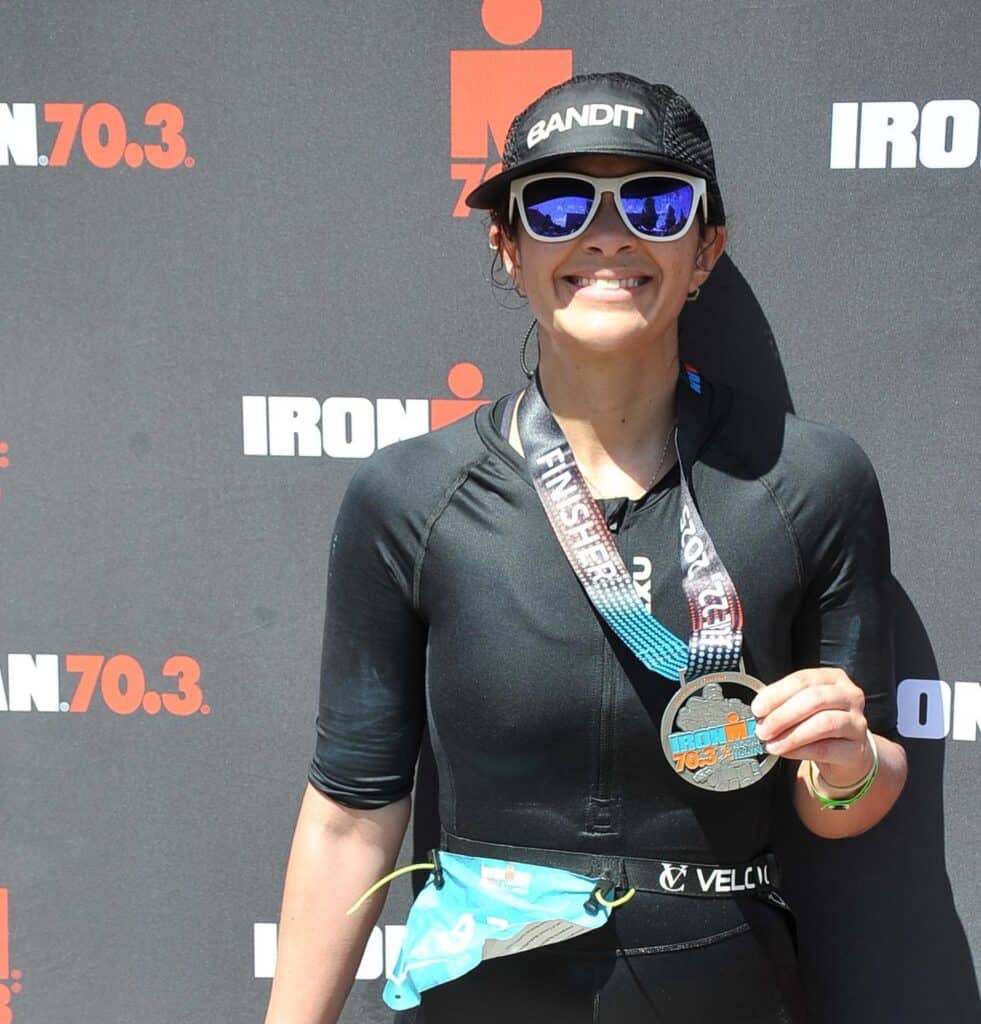
That’s when I realized I couldn’t do it alone. If I wanted to return to running, I needed support—someone objective, with a balanced perspective on training and health. That’s when I reached out to Stephanie Mundt for help. Two years later, I’ve completed two marathons and a Half Ironman. I’m the strongest athlete I’ve ever been—despite having run for over a decade before working with her. More importantly, she helped me rebuild my relationship with injury, movement, and food.
Through that process, I discovered a love for triathlons—the variety, the challenge, the balance. I learned that joy in sport comes not from pushing harder, but from giving yourself grace. That experience changed me. And it made one thing clear: if I can help others feel this way, I will do everything I can to make that happen.
The way I fell in love with sport—along with my background as a physical therapist and my experience with injury and recovery—shapes how I can help athletes reach their goals in a balanced, healthy, and realistic way.
Education
B.S in Biological Sciences, Virginia Tech, 2014
Doctorate in Physical Therapy, University of Southern California, 2017
Certifications
NESTA ITCA Coach Certification, 2026